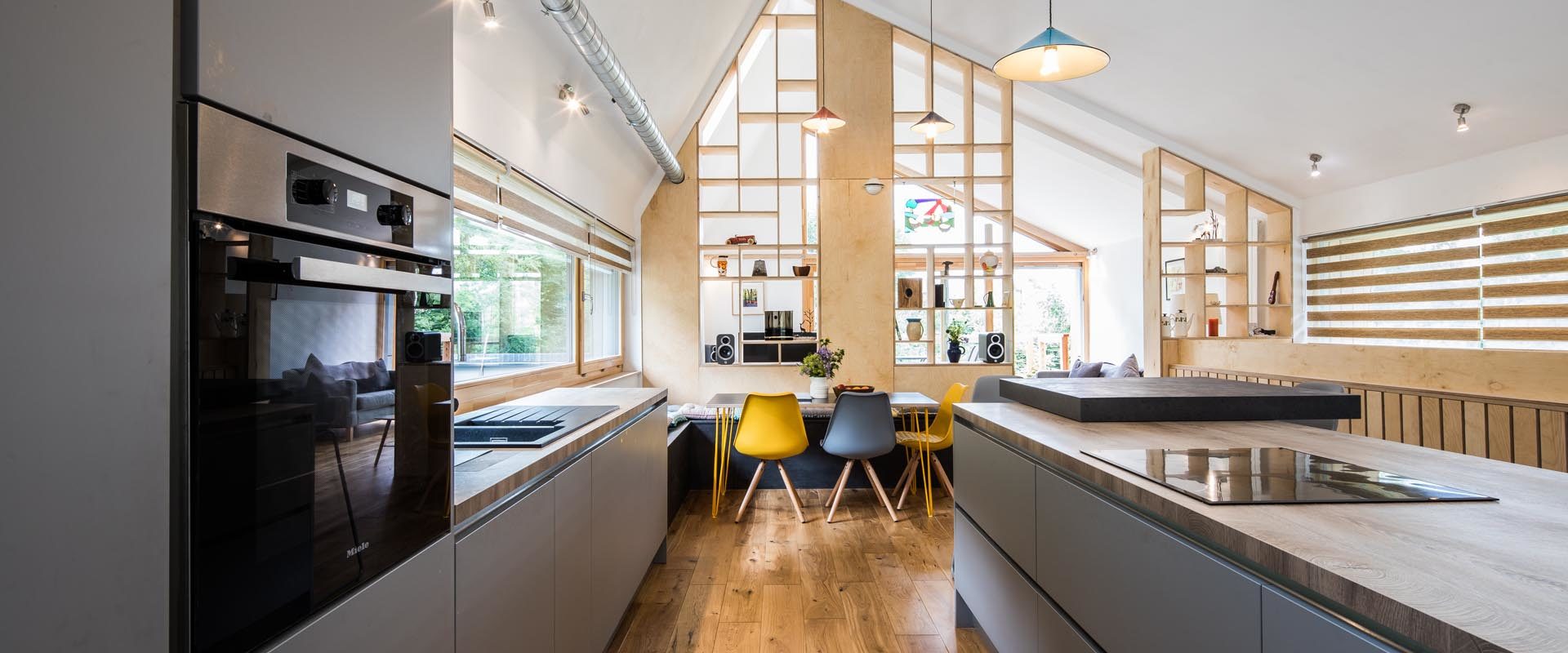
Mechanical Ventilation with Heat Recovery (MVHR) is a system that provides fresh, filtered air to a home while simultaneously removing the stale, moist air and recovering a significant amount of the heat from the outgoing air to warm the incoming air.
At HEM Architects, we help lots of clients create lower energy homes, often discussing MVHR systems as a way to reduce energy consumption and improve air quality.
There’s a wide variety in the quality and cost of the MVHR systems available which can be tricky for some homeowners to navigate.
So we invited Tom Heywood from 21° to write a guest blog on the benefits of a high quality MVHR system and why a well designed MVHR system is more important than the product.

MVHR is important for low-energy homes
MVHR is a crucial technology for maintaining high quality indoor air quality and comfort in low energy homes.
When designed correctly MVHR provides the ideal ventilation solution, ensuring the correct airflow and enhanced indoor air quality, while supporting the overall health of the homeowners and the fabric of the building.
A well designed MVHR system is more important than the product. When the MVHR system is well designed it can significantly reduce heat loss by recovering warmth from outgoing air and it should operate so quietly that it’s virtually inaudible.
MVHR systems can deliver long term benefits
There are two main types of MVHR systems. The first involves installations where a ventilation system is required to meet Part F of building regulations. This is effectively a “box-ticking” exercise and almost always a missed opportunity.
The second is where a high-quality system is chosen to ensure optimal health and comfort for the homeowners, protect the fabric of the building and maximise heat recovery for better energy efficiency.
While it’s tempting to choose a system to satisfy building regulations, investing in a high-performance MVHR system can deliver long-term benefits by reducing energy bills and enhancing comfort.
It’s also worth noting that current UK Building Regulations (Part F) are quite vague when it comes to MVHR systems.
While they set minimum airflow requirements for certain rooms, they don’t account for how well the system performs in everyday use—particularly when it comes to noise levels.
That’s why we design all our MVHR systems to meet the much stricter Passivhaus standard, which ensures consistent, high-quality performance and near-silent operation.
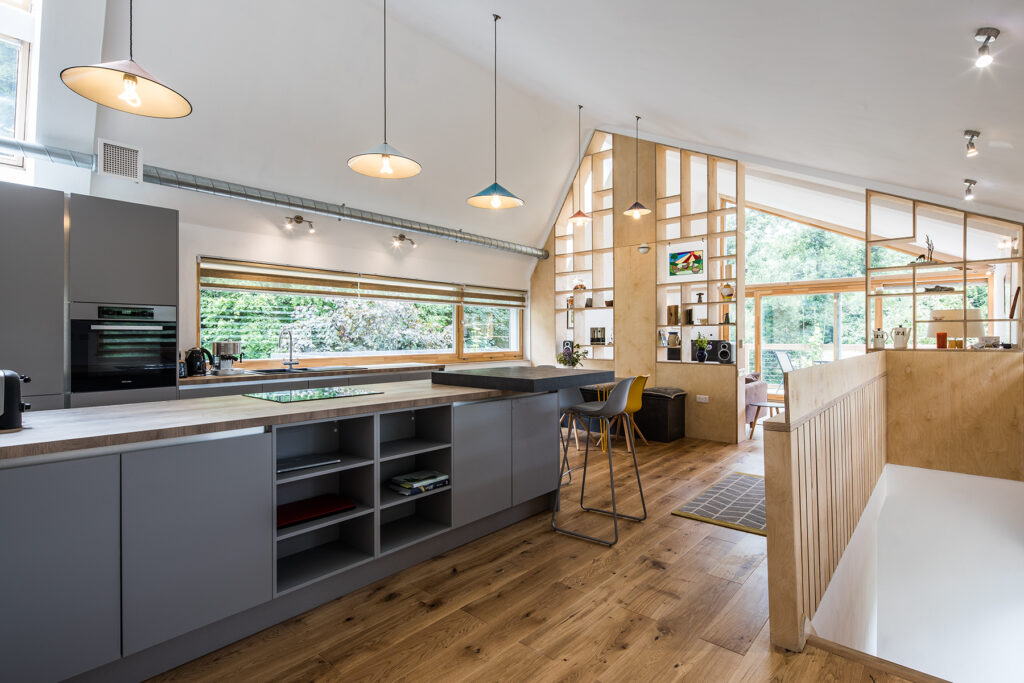
Case study: hen house
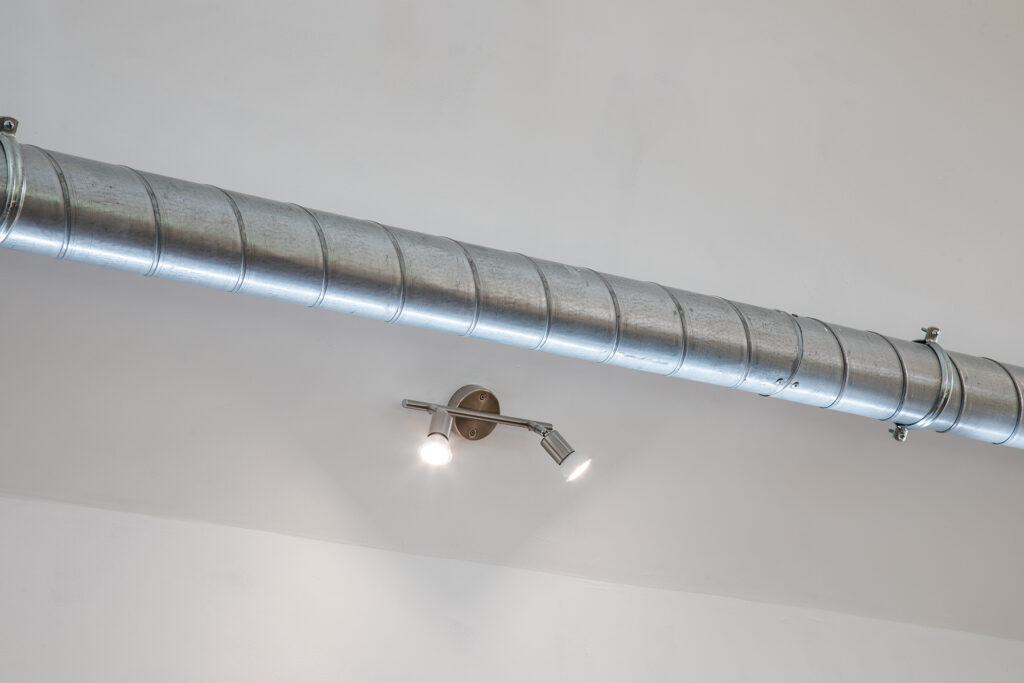
This new build home in Bradway, Sheffield had MVHR in the home as an effective way of achieving excellent air quality in a low energy home.
You can see in the photos, the discreet galvanized spiral wound rigid ducting, with positive airtight jointing provided by 21 Degrees.
With regular maintenance, the MVHR system will last for the lifetime of the building.
Focus on performance, not product
As MVHR increases in popularity, so too does the number of inadequate services and systems on the market.
Unfortunately, in 95% of cases poor or missing design causes system failures.
Often, poor designs are simply schematics showing where the ducts should be placed, without addressing the key aspects of performance.
There’s two performance indicators of a good MVHR system. The first is flow rate, the second is decibel rating or how loud the system is and not just the unit, but the whole system.
One of the biggest mistakes is focusing on a specific product specification rather than a performance specification. It’s not uncommon to see requirements like “an MVHR unit from manufacturer X must be provided.”
However, the focus should be on the system’s performance, with the flexibility to choose the right products to meet that goal.
For example, instead of specifying a brand, specify that the MVHR system must deliver:
30m³/hr per person, keep sound levels in habitable spaces below 25dB(A), keep total static pressure under 100Pa, and position air diffusers for optimal airflow.
And crucially, a contractual design agreement should back this performance.
Case study: sycamore hall
This deep retrofit home in Bolsterstone, Sheffield used MVHR to improve the air quality in the home for John and Jean.
“When we moved into our new home in 2016, we trusted HEM Architect’s advice that an MVHR system would be beneficial and we’re so glad we did.”
“It’s made a huge difference to how the house feels: fresh, clean air year-round, whilst maintaining an air-tight home.”
“We hardly even notice it running, but we’d absolutely notice if it wasn’t there. Nine years on, it’s been easy to maintain and completely reliable. Our home wouldn’t be the same without it.”
JOHN
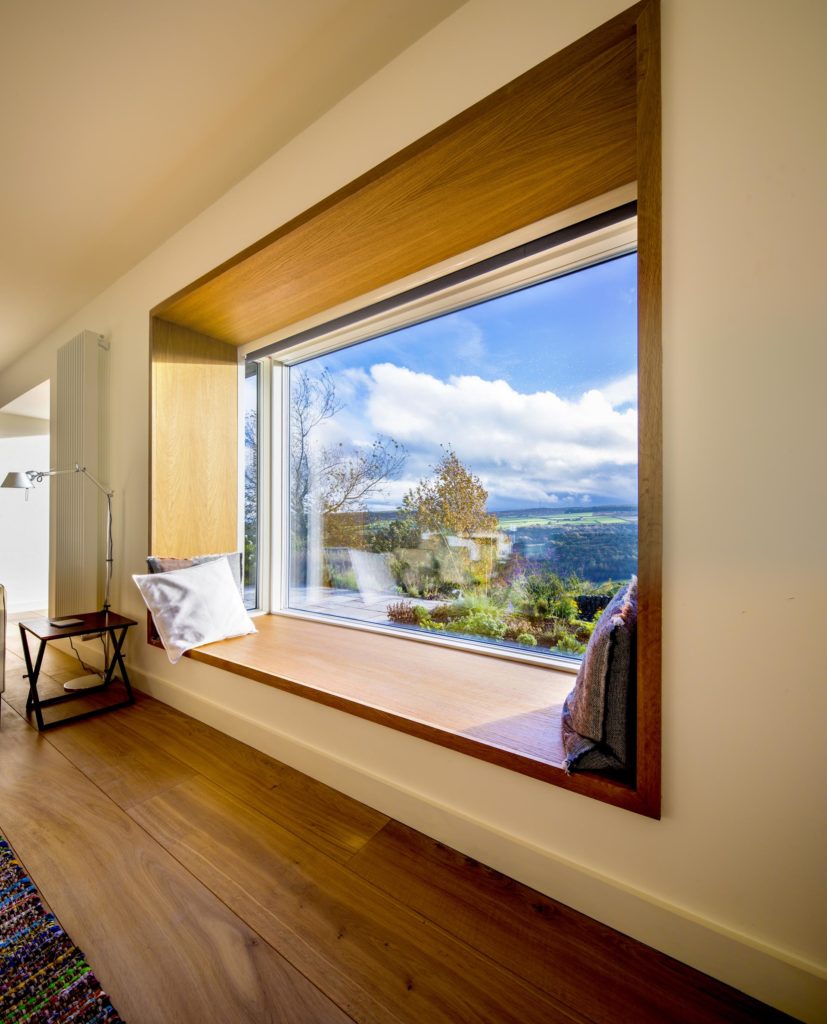
A carefully designed system that’s inaudible
At 21° our design service guarantees that your MVHR system is not only inaudible but also delivers the necessary airflow for health, comfort, and efficiency. All while keeping running costs low thanks to our low-pressure ducting design.
After supplying the products to match the specification, we commission the system on-site to ensure it performs as designed, eliminating the performance gap that often occurs with poorly installed systems.
The key takeaway? A well designed MVHR system is more important than the product and prioritise a performance specification over a product specification.
The quality of the ducting design and the efficiency of airflo, not the brand of the unit to determine how effective your MVHR system is.
The MVHR unit can only perform as well as the duct system it is connected to, so the design and installation process is critical to achieving the best results.
links
Need a team to create a low energy home?
We’re experts at creating low energy homes, with long term health benefits.