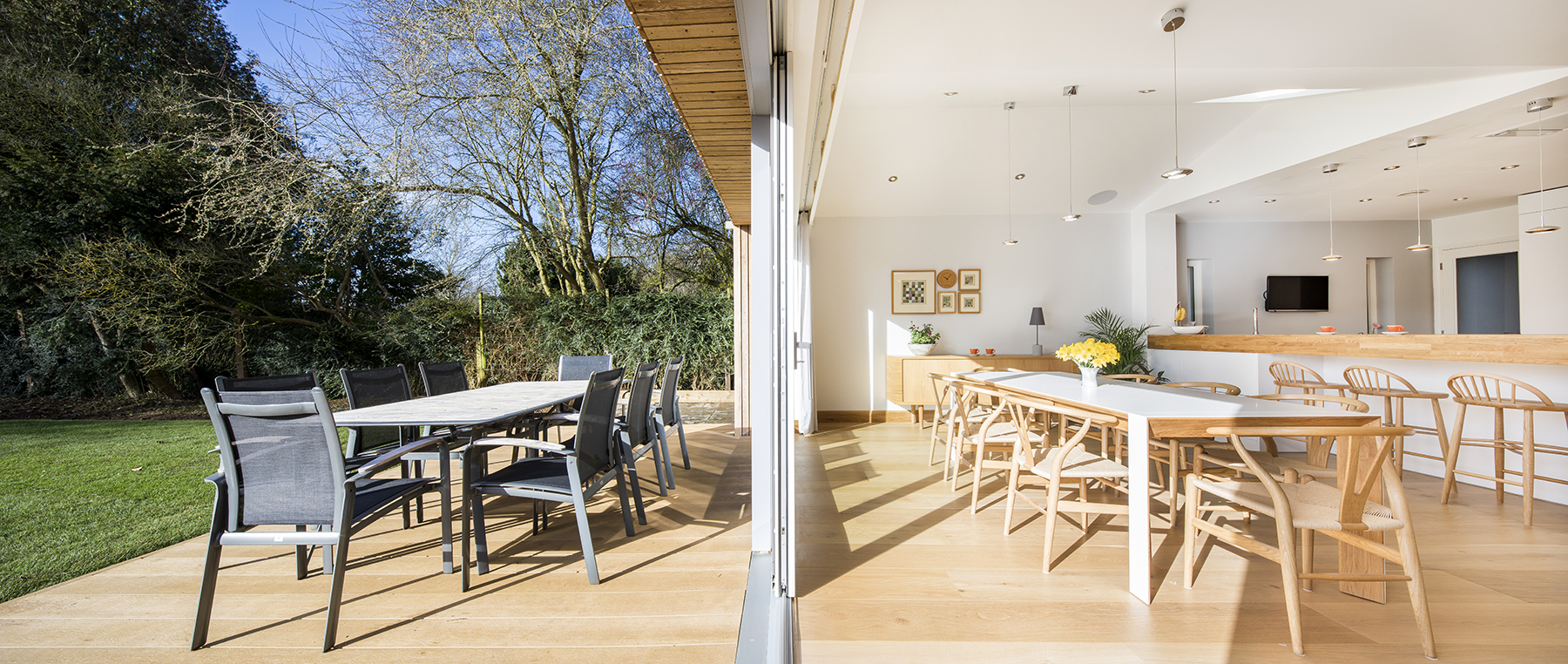
Do you have the sun shining into your home all day and it struggles to cool down at night?
Do you have parts of your home such as loft rooms, extensions or conservatories that are close to uninhabitable during heatwaves?
With hotter summers becoming the norm, keeping homes cool and comfortable in rising temperatures is now an important consideration. We’ve seen first-hand that homeowners become frustrated with conservatories or extensions with lots of glazing or poorly insulated lofts that are too hot.
But with the right approach, overheating can be prevented naturally, without extensive air conditioning or fans. Also without sacrificing natural light, superb views or beautiful design.
Here’s some tips and tools to prevent your existing home or a new build home from overheating during the summer.
Solar shading is an effective method to reduce overheating
Solar shading is a simple yet highly effective way to keep your home cool, by blocking or deflecting the sun’s heat before it passes through your windows.
By limiting solar gain, it prevents heat from building up indoors and helps maintain a comfortable temperature naturally.
The key is to block high-angle summer sun while still allowing low winter sun to enter. Well-positioned solar shading is especially important on south and west-facing elevations where the sun is strongest.
Shading can take many forms. Fixed architectural features like overhangs, deep window reveals or timber slats can provide permanent protection. Temporary solutions like sails, shutters or external blinds can also help.
case study: stamford road
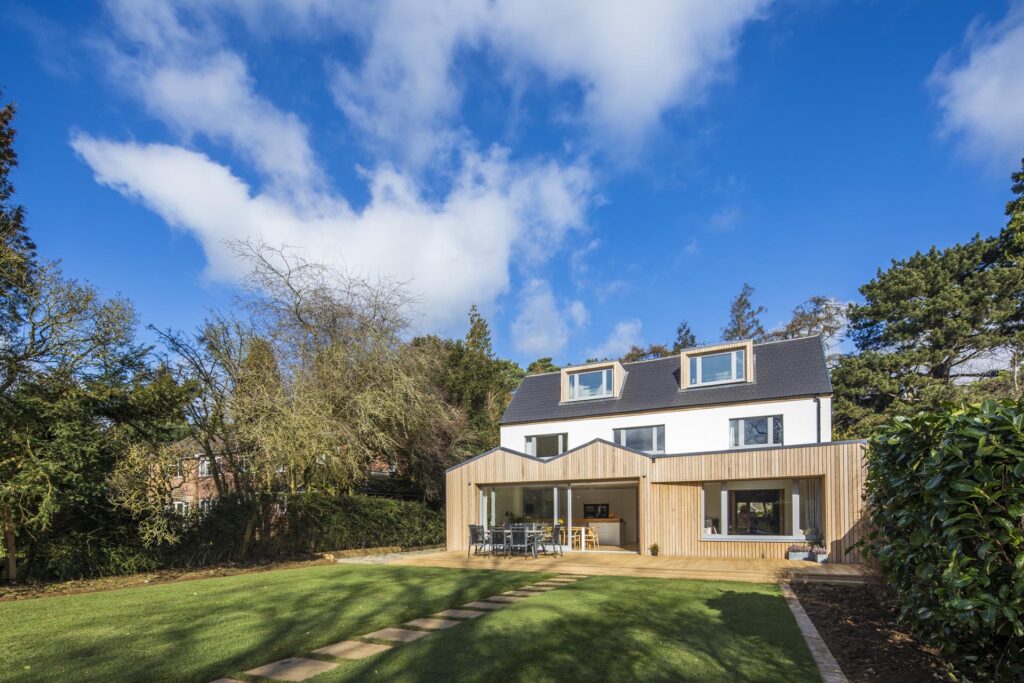
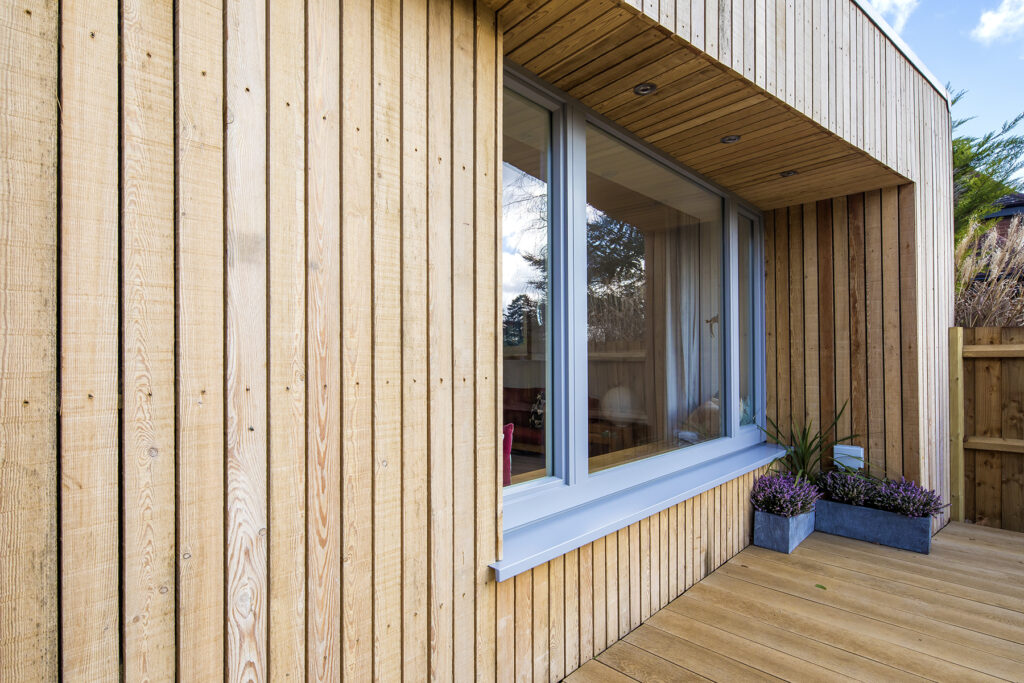
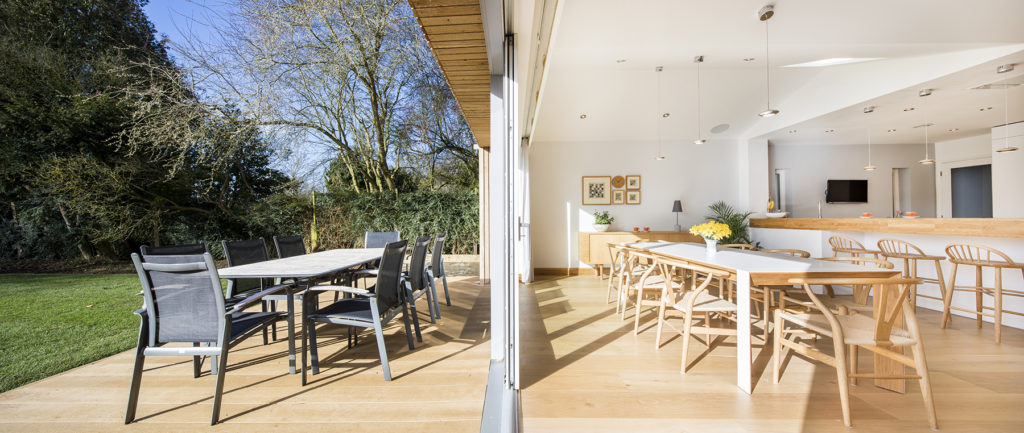
Solar shading is used effectively on our Stamford Road project in Oakham to make sure the large South facing sliding doors and windows didn’t get too hot in the summer.
The deep door and window reveals have been designed to create solar shading at the height of summer.
Air-tightness and ventilation
Just as you try to keep cold air out in winter, keeping hot air out in summer is key to staying comfortable. The less warm air that enters your home, the cooler and more pleasant it will feel inside.
Improving the airtightness in your home can really help prevent hot and cold entering your home. This can be through improving the insulation in your roof and walls or sealing up gaps around windows, doors around electrical outlets and plumbing pipes.
Ventilation is also important. Ideally this would be through a Mechanical Ventilation with heat recovery (MVHR) system that will transfer the heat in reverse in the summer, pre-cooling the incoming air to ensure you remain comfortable. These systems also improve the air quality of your home by replacing stale air with fresh filtered air.
In the absence of MVHR you can prevent hot air coming into your home by keeping your windows closed during the day. Then once the outside temperatures drops at night, you can open windows and purge any excess heat that’s built up during the day.
We also find that opening rooflights make this extremely effective as they create a chimney effect reducing reliance on wind to drive the air through.
The big difficulty is when night time temperatures stay high. This makes the reduction of heat gain during the day even more important as you can’t reset at night.
We’re seeing more often, heatwaves that last for multiple days with little relief at night. This can create overheating that even the most carefully designed homes can’t prevent.
Using Passive House modelling software
We know that Passivhaus buildings manage overheating risk very well. HEM Architects are experts in the Passive House Planning Package (PHPP) software that assesses the risk of a building overheating.
Architects, building designers and contractors are becoming more attuned to testing overheating using PHPP software to give the best possible performance for home owners.
We use PHPP at HEM Architects on a variety of projects and on almost all of our new-build homes. However, PHPP provides a simplified ‘whole building’ overheating analysis, which is a useful indicator but it doesn’t necessarily identify higher risk rooms/spaces within the building.
A building that performs well overall but contains a few uncomfortably hot rooms isn’t practical and this kind of localised overheating isn’t always flagged by PHPP.
We are getting much better at understanding this and designing buildings with shading and orientation/fenestration to minimise these localised risks, but the software can’t back this up on a detailed level.
Insulation is not just for winter
A well insulated home will be more likely to keep you home cool in summer. Insulation of any kind slows the transfer of solar heat into the home.
Denser insulations like woodfibre have a higher decrement (thermal delay) than lighter insulations such as PIR and mineral wool. This means that the transfer of solar energy is further delayed, keeping the house cooler for longer.
Likewise, higher performing glazing will slow the transfer of heat from outside to in; but any windows in the sun will get warm very quickly.
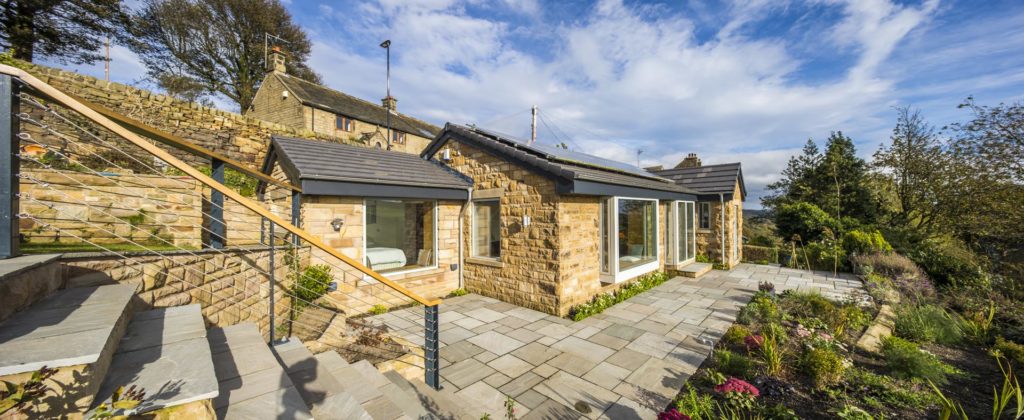

case study: sycamore hall
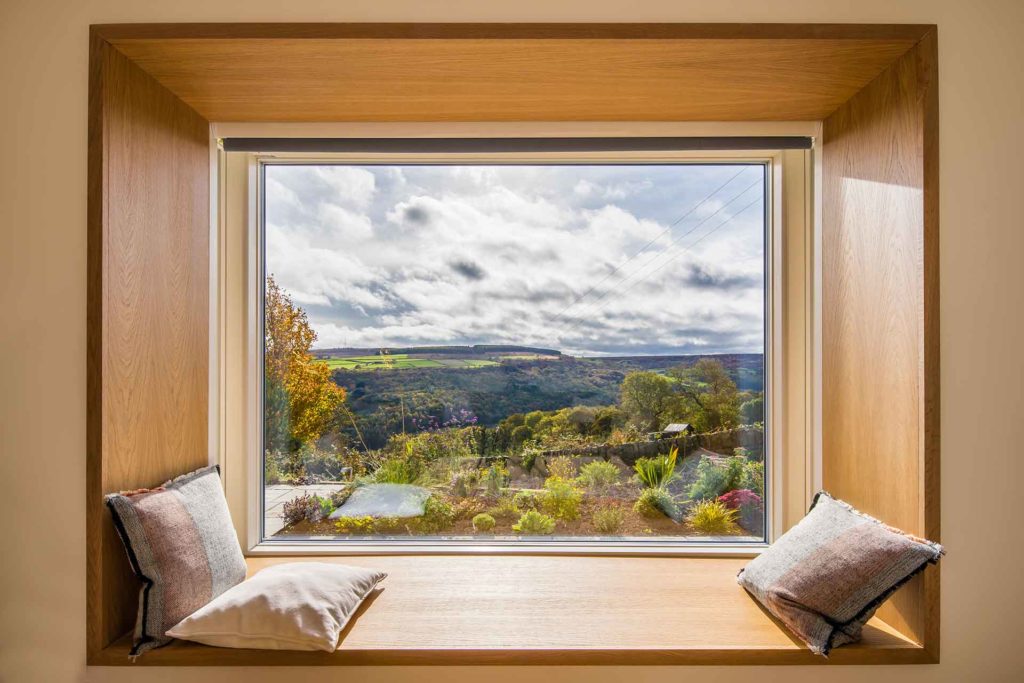
This thorough retrofit of a dated bungalow included upgrading the insulation, air-tightness work, installing triple glazed windows and MVHR.
The result is a wonderfully cool (and warm) home to live in throughout the year.
Building regulations to prevent overheating
The introduction of Part O in the Building Regulations looks to stop the risk of extreme overheating in new builds. It mainly looks at limiting solar gain and ensuring there’s adequate ventilation.
We do find that there’s a risk of overheating in projects that look to have large areas of glazing and therefore need to be carefully designed.
As always, reliance on the baseline of the regulations is unlikely to give the very best outcomes.
Carefully consider your team
If a comfortable home all year round is important to you, then make sure you choose an architect that’s knowledgable of retrofit and how to improve the performance of your home.
They should have the skills & experience to be able to craft a beautiful, naturally lit space that stays cool in summer.
Also choose a builder that can show a good eye for detail and work with air-tightness in mind. Thankfully, we work with plenty of builders who do this.
Fixing problems with overheating can be costly. With hotter temperatures seemingly more likely, it makes sense to appoint a team who will get this right for your home.
Does your house feel like a green house?
We can help to fix it with our Retrofit Strategy Service.