Are you undertaking a renovation or build project and want to be certain about costs? Do you want to understand your costs early before you finalise your design?
The best time to lock that in is when the drawings are detailed enough to price, but before every nut and bolt is fixed. That moment can come after you have planning permission and you start your Technical Design stage.
Early tendering gives you real prices while there is still time to refine specifications, details, and the build approach. It turns guesswork into evidence, reduces risk, and keeps your options open. In short, you protect your vision and your budget in the same move.
At HEM Architects we build cost clarity into the process from feasibility and cost planning through detailed design and on-site support. Here is how early tendering in Technical Design works in practice, why it outperforms late tendering, and the practical steps to de-risk your build.
What early tendering is, and when it happens in the Technical Design
Technical Design is where we move from the big picture to the small details. At this point we have the design principles agreed, planning approval is secured, and we are now producing detailed information ready for construction.
Early tendering means inviting selected contractors to price your project once the drawings, schedules, and specifications are clear enough to compare like for like, but before every element is frozen. Think of it as market testing during Technical Design, not after it.
We prepare a coordinated tender pack so each contractor is pricing the same scope. You then receive side-by-side returns that show costs, lead times, and any assumptions. With that feedback, we can adjust details, materials, and sequencing before finalising the technical information. This avoids rework later and sets a more reliable programme.
How early tendering creates room to reduce costs without cutting quality
The earlier you invite prices, the more levers you still have. Typical opportunities include:
- Specification swaps with the same performance: for example, swapping window manufacturers or a more basic and cheaper window range with a similar performance.
- Detail refinement: simplifying junctions, rationalising steelwork, or standardising sizes to make construction more efficient.
- Procurement choices: identifying long-lead items early so they can be ordered in good time, or choosing readily available alternatives that do not compromise design.
- Buildability improvements: minor layout adjustments that make sequencing easier, shorten programme, and reduce preliminaries. Designing around your builder’s preferred techniques means fewer mistakes, lower costs, and a faster build.
Early contractor input helps validate what really drives cost on your project. You can then invest where it matters, like thermal performance and robust external fabric, and trim back where cost adds little value.
Early vs late tendering in Technical Design, a clear comparison
| Early Tendering | Late Tendering | |
|---|---|---|
| COST CERTAINTY | Provides live market prices while change is still easy. | Can deliver a crisis where change is costly. |
| DESIGN QUALITY | Early input guides smarter details so quality is preserved. | Late cuts risk removing benefits that improve comfort and quality. |
| PROGRAMME | Early insight exposes lead times and sequencing needs. | Late discovery triggers redesign and delays. |
| RISK | Early adjustments reduce provisional sums and variations. | Late changes push risk into construction, where it is more expensive. |
Why late tendering at the end of Technical Design is harder on your budget
Waiting until every detail is fixed removes your ability to make sensible, low-risk changes. Common traps include:
- Value engineering by deletion, not design: if the price lands high and the design is fully fixed, the only quick fix is to remove features. You risk losing the touches that support comfort, durability, and long-term running costs.
- Programme shock: unplanned redesign after tender adds weeks, consultant fees, and momentum loss. Meanwhile, material prices and contractor availability can shift again.
- Fragmented scope: rushed cuts create gaps, which reappear on site as variations. Variations cost more than planned work and strain relationships.
- Lead time surprises: discovering at tender that a critical component has a 14-week lead time can derail your start date. Early tendering highlights these issues when you can still adjust sequencing or product choice.
In short, late tendering compresses decisions into a pre construction crisis. Early tendering spreads decisions out, with calmer trade-offs and better outcomes.
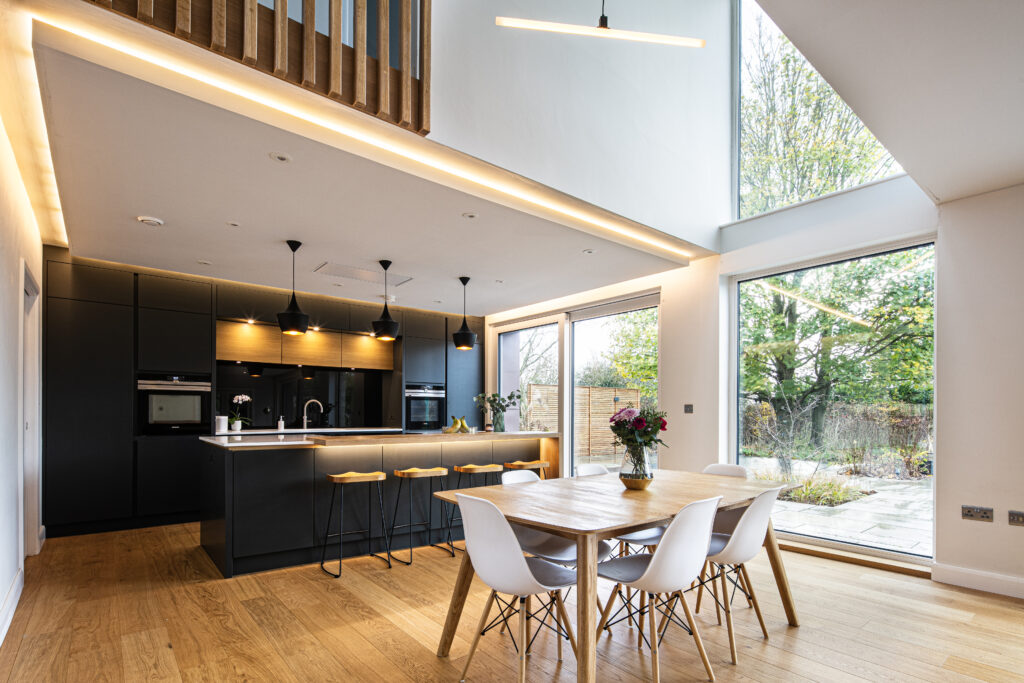
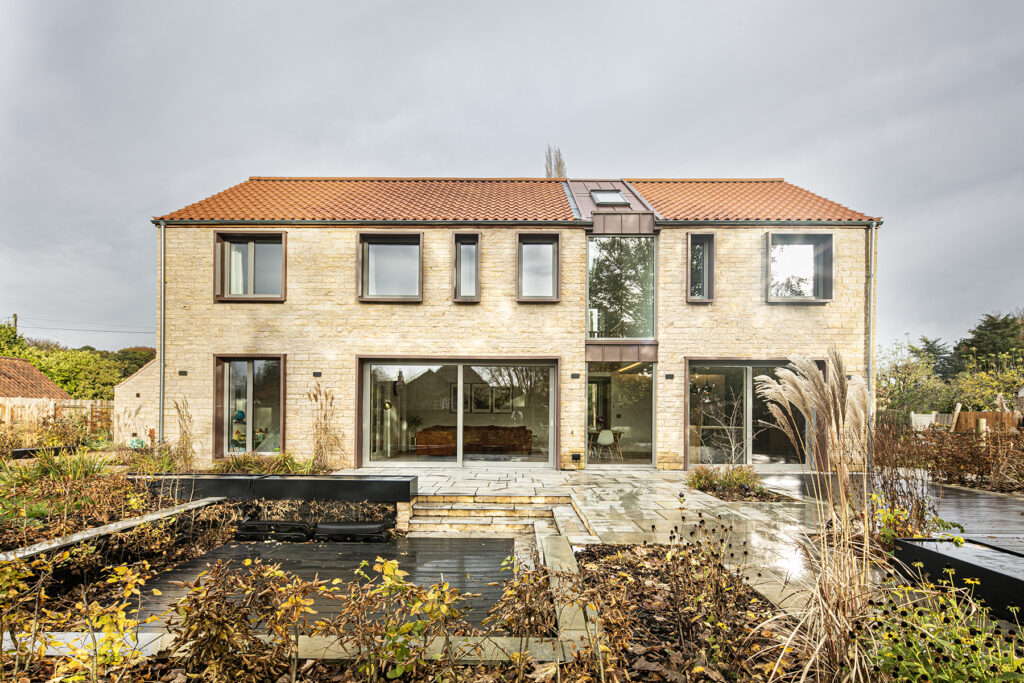
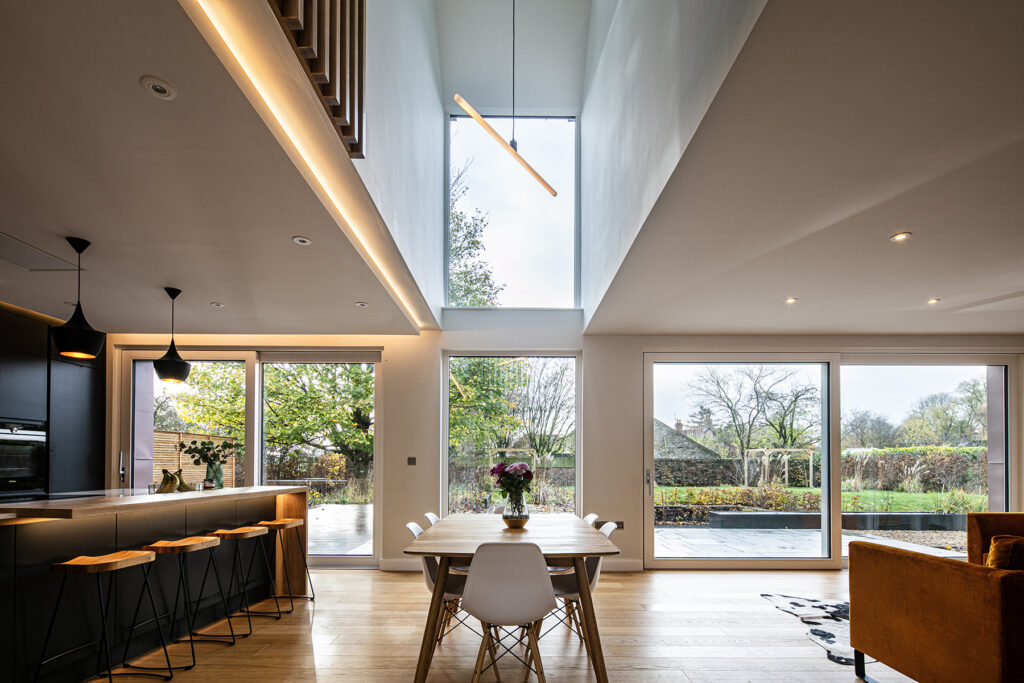
THE ORCHARD
A modern home on a tight budget
Lee and Jaclyn purchased the site, in a conservation area, with planning permission for a standard house.
The existing scheme with planning approval was too large and was badly designed.
HEM Architects redesigned the scheme saving £200,000 in build cost without any loss in its final value.
Practical steps to tender early and de-risk your budget
Here is a simple path you can follow:
- Start with a clear brief and cost plan. Use an initial budget band and contingencies so design moves are anchored in reality.
- Commission a coordinated tender pack. Drawings, schedules, and specifications must align so contractors can price the same thing.
- Shortlist the right builders. Aim for a balanced list with relevant residential experience, good references, and capacity. We can introduce trusted local contractors to keep the process competitive.
- Invite pricing early in Technical Design. Do not wait for perfection. The goal is pricing clarity with room to refine.
- Review returns side by side. We identify gaps and assumptions, then meet shortlisted builders to discuss methodology, sequencing, and quality control.
- Adjust and finalise. With real prices and lead times in hand, we make focused changes to details and specifications, then issue final technical information. You proceed to contract with fewer unknowns and a more realistic programme.
Just starting to explore ideas?
Download our free Build Cost Calculator to establish a realistic baseline for your project before you start designing. By subscribing to our newsletter Notes from a Small Practice you will be able to download
Subscribe and download the free Build Cost Calculator
Need experts to lead your build project?
We provide comprehensive project management and coordination services to ensure that what gets designed is delivered in construction.